.png)
The Importance of Hammer Mills in Corn Production

Corn production doesn’t slow down for equipment that can’t keep up. When grinding operations fall behind, it backs up the entire system, from storage to mixing to outbound shipments.
Grinding corn efficiently requires more than a basic mill. It demands a hammer mill for corn built for high-volume, heavy-duty work, day after day, without breaking down or falling behind. A system that can chew through tons of dry, dense kernels without losing speed or consistency.
That’s where hammer mills come in.
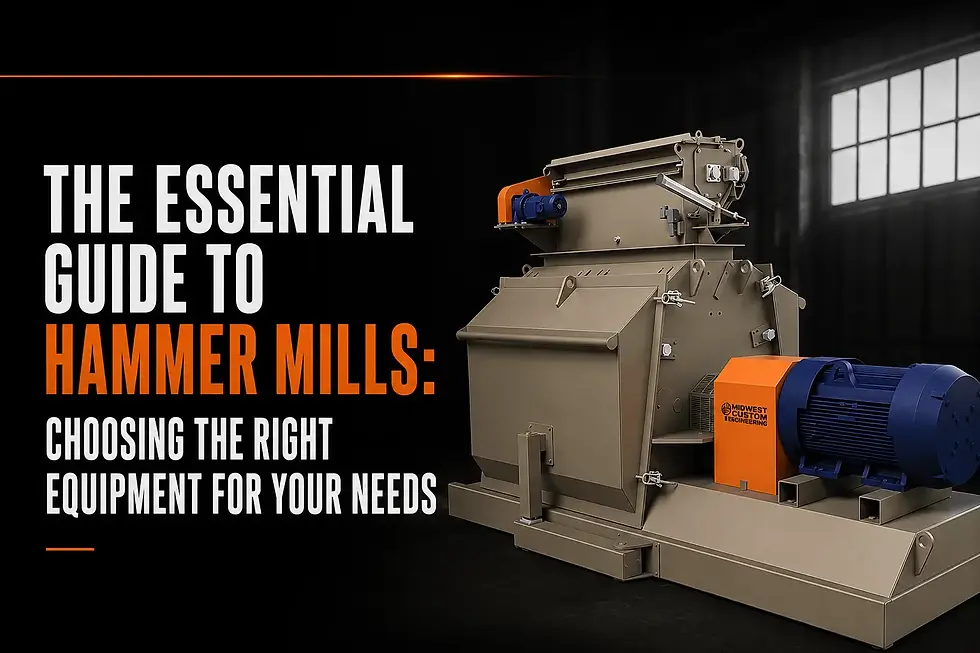
Designed for durability and built for throughput, corn hammer mills have been the backbone of high-volume corn grinding for decades. When sized and spec’d properly, they deliver the kind of consistent, reliable performance that busy feed mills, ethanol producers, and grain processors rely on to keep production lines moving.
In this guide, we’ll break down why corn demands more from your grinding system and what makes a hammer mill the right choice to meet that demand.
Why Corn Is Tougher on Equipment Than You Might Think

On the surface, grinding corn seems simple enough. But anyone who's run a high-volume corn operation knows the real story. Corn is hard on equipment, and small mistakes in system design or sizing add up fast.
Corn kernels are dense, durable, and tough-skinned. Breaking them down consistently puts significant strain on grinders, rotors, hammers, and screens. Add in the fact that most facilities push through large daily volumes, and it’s easy to see why underbuilt grinders wear out quickly or cause bottlenecks.
Key challenges when grinding corn at scale:
High Abrasion: Dry kernels hammer against metal surfaces with every pass, accelerating wear on rotors, hammers, and screens.
High Volume Loads: Even mid-sized feed mills and processors move multiple tons of corn per day. The grinder needs to keep up without overheating or losing efficiency.
Consistency Demands: Many downstream processes, like mixing or pelleting, rely on consistent corn particle size. Inconsistent grinding hurts product quality and operating efficiency.
Equipment that isn’t built specifically for corn grinding often suffers in one of two ways: frequent breakdowns from worn parts or the inability to maintain consistent throughput when demand peaks.
This is exactly why serious operations rely on hammer mills designed for the load, the abrasion, and the volume that corn grinding demands.
How Hammer Mills Are Built for High-Volume Corn Grinding
Grinding corn at scale requires more than raw power. It takes equipment that’s purpose-built for long shifts, heavy loads, and minimal downtime. That’s exactly what a well-designed hammer mill delivers.
These systems are engineered for tough, continuous use. They handle dense grain loads without binding, overheating, or producing inconsistent results. When properly configured, a hammer mill moves corn through the grind zone with precision and efficiency, hour after hour.
Key Design Features That Support Corn Grinding:
Heavy-Duty Rotor Assemblies
The rotor is where all the work happens. In corn applications, it needs to be solid, dynamically balanced, and capable of maintaining speed under load. A strong rotor ensures even hammer wear and smooth grinding, even under high-volume conditions.
Optimized Hammer Arrangements
Hammer mill hammers can be spaced and shaped for different grain types. For corn, a tighter pattern with durable, possibly reversible hammers helps break down kernels efficiently without over-pulverizing them or wearing out too quickly.
Wide Feed Openings and Chutes
To support large input volumes, feed hoppers and inlets are designed to move material into the mill without clogging. Consistent feeding helps the grinder maintain its rhythm and reduces wear on specific hammer edges.
Screen Options That Match Throughput Needs
Different hammer mill screen sizes allow you to adjust the final particle size to match feed requirements. Larger screens allow more volume to flow; smaller screens produce finer grinds. Quick-change screens let operators switch setups between shifts or product types without hours of downtime.
Discharge and Dust Control
A well-matched discharge system, whether it's an auger, pneumatic transfer, or gravity chute, keeps ground corn moving efficiently downstream. Many mills rely on sealed systems to reduce airborne particulates and improve operator safety.
Energy Efficiency at Scale
Hammer mills designed for corn grinding are typically optimized for high throughput at lower per-ton energy costs. With the right motor and rotor combination, they grind more with less.
When the job is grinding corn, these design choices aren't optional. They're essential. That's why purpose-built hammer mills for corn continue to be the most dependable choice for grain processors, feed mills, and ethanol producers who can’t afford downtime.
Key Features to Look for in a Corn Hammer Mill
Not all grinders are built to handle the demands of corn processing. When selecting from available hammer mills for corn, it’s critical to look beyond the horsepower rating and focus on the components that affect daily performance, maintenance, and long-term wear.
These are the features that matter most in real-world corn operations:
1. Wear-Resistant Hammers and Grinding Chamber
Corn is abrasive, and over time it will wear down light-duty components. Look for mills equipped with hardened hammers and abrasion-resistant steel in the grinding chamber. Reversible hammers help extend service life and reduce replacement costs.
2. Customizable Screen Options
Grind size matters, especially if your ground corn is headed for feed mixing or pelleting. Corn-specific hammer mills should include multiple screen options with easy-change access so operators can switch sizes between batches or production runs without long changeover times.
3. Accessible Maintenance Points
Downtime during harvest or peak production seasons isn’t an option. Hammer mills designed for corn should feature:
Tool-free access doors
Bolt-on wear plates
Quick-release screen assemblies
These features speed up inspections and part swaps, keeping the mill online longer.
4. Properly Sized Discharge and Material Handling Integration
A good grind means nothing if material flow slows after the mill. Choose a hammer mill with discharge options that match your system, whether that’s gravity-fed chutes, augers, or pneumatic transfer. Many hammer mills for corn also include dust control features to keep fine corn dust from escaping into the workspace.
5. Sturdy Frame and Vibration Control
High-speed grinding creates vibration, especially under load. A well-constructed base and integrated vibration control protect nearby equipment and keep wear on bearings and seals in check.
6. Safety Features for Daily Operation
Integrated guards, emergency shutoffs, and safety interlocks are essential in high-throughput environments. These features protect workers and reduce the risk of downtime due to mechanical failure or operator error.
Benefits of Using Hammer Mills for Corn Processing
Choosing the right equipment is about more than specs. It’s about how that equipment performs when production ramps up, materials vary, and downtime isn’t an option. That’s why so many grain processors, feed mills, and ethanol producers rely on hammer mills for corn: because they work when it matters most.
Consistent Throughput and Grind Quality
High-volume corn operations can’t afford uneven particle sizes or flow disruptions. Hammer mills deliver steady, uniform output, which helps maintain product quality across batches and ensures smoother operation downstream.
Built-In Durability for Long-Term Use
From reinforced rotors to wear-resistant hammers, hammer mills for corn are engineered to withstand continuous impact. That means less time spent on repairs and more time moving product. For operations running 8, 12, or 24 hours a day, reliability like this isn’t a bonus. It’s a requirement.
Lower Maintenance Costs Over Time
Purpose-built hammer mills last longer between service intervals and are easier to maintain. With features like quick-access doors, bolt-on parts, and field-replaceable components, routine maintenance takes less time and costs less in labor and lost production.
Flexibility for Multiple Corn-Based Products
Whether you’re producing cracked corn for feed, fine flour for processing, or something in between, hammer mills can be adjusted quickly to meet changing specs. That flexibility adds value, especially in operations that serve more than one end-use market.
Final Thoughts: Keeping Your Corn Line Moving
Corn processing doesn’t leave much room for error. When the grinder slows down, the whole operation feels it: backlogs build up, feed schedules get disrupted, and maintenance teams scramble to fix problems that could’ve been avoided with the right equipment in place.
That’s why hammer mills for corn remain the go-to solution for high-volume grain operations. They’re built to keep up, built to last, and built to deliver consistent performance shift after shift. From dense kernels to tight production windows, they handle the pressure without cutting corners.
If you’re ready to step up your grinding capacity or simply tired of fighting with equipment that can’t keep up, Midwest Custom Engineering is here to help. Our team can walk you through sizing, configuration, and integration to make sure your hammer mill isn’t just another machine. It’s a reliable part of your workflow. Let’s keep your corn line running exactly the way it should.
Comments